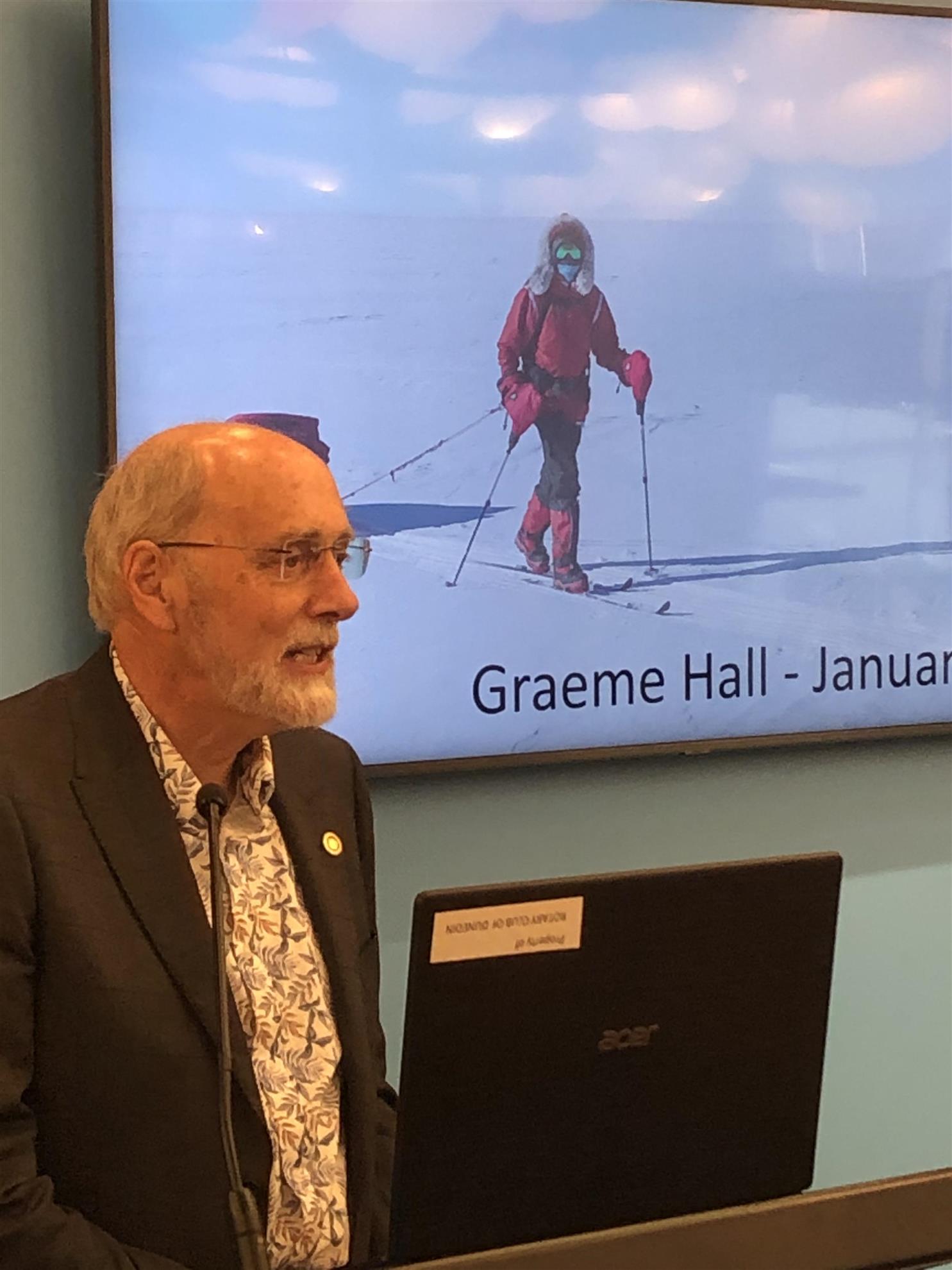
 Graeme Hall gave us a fascinating insight into the expedition he and his son Dean (remember his presentation at the Mt Cook conference about climbing Mt Everest?) took in January 2020 walking to the South Pole. Joining an organised group in Punta Arenas (Chile - the same place that Ernest Shackleton eventually got to when getting help for his team), they flew down to Union Glacier in a Russian plane, and then on to a point 89 degrees south by DC-3 to walk the last degree (120 kms) to the South Pole. They were part of a group of 6 (2 Russians, 2 Kiwis, an American and a Norwegian guide), each towing a sled while walking for 8 - 10 hours a day on skis. It was physically very demanding, but they could not afford to raise a sweat because that would have just frozen inside their clothing in the -20 to -30 temperatures. Graeme described the anguish of landing on the ice at midnight at the drop-off point, and weighing up whether to do the sensible thing and get back on the plane, or to stay on the ice with no choice but to walk to the South Pole..... Everything was white and cold, except the sky which was blue and cold. The trip was very regimented, partly because all of the others in the group were ex-armed servicemen, and partly because frost-bite would start occurring after 10 minutes of exposure. The group had a couple of long 40 km days after a more gentle start, and reached the South Pole safely - where they found a summer camp with air-conditioned tents and solar heating just for tourists who fly in, and a nearby American research station which really spoiled the view. Graeme showed us a great photo of himself at the South Pole marker, with a New Zealand flag behind him, taken just before they were picked up by plane to return to civilisation. Graeme had, a few years earlier, walked to the Mt Everest base camp in the Himalayas - and he assured us that the walk to the South Pole was physically much more demanding! Some of us prefer to just walk around the block.........? Interesting fact: the land at the South Pole is about 300m above sea level, but it is covered in 3000m of ice! |




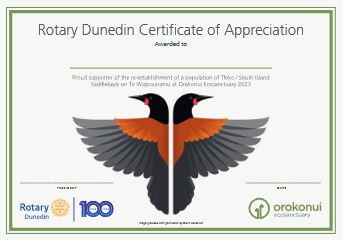 We have a small project team whose goal is to raise funds for our first centenary project! They plan to reward corporates or individuals who support the project with a $600 donation or more, with a unique certificate of appreciation
  Special reduced price of $30 per person (normally $45).